In sludge dewatering, water is removed from water-containing sludge with the aim of reducing the sludge volume. This process is used in industry wherever sludge is produced during water treatment and needs to be dewatered further for economic and sustainability reasons.
With its vacuum belt filter, Leiblein offers solutions for a wide variety of applications and sectors.


Not every sludge dewatering process is suitable for every application. This comparison highlights the key differences and helps to assess when Leiblein’s vacuum belt filter may be the best choice compared with other processes, such as chamber filter presses or decanter centrifuges.
| Chamber filter press | batchwise, sludge buffer required |
| Decanter / Centrifuge | continuous |
| Belt filter press | continuous |
| Vacuum belt filter | continuous or batchwise |
| Chamber filter press | high |
| Decanter / Centrifuge | high |
| Belt filter press | moderate to high |
| Vacuum belt filter | moderate to high |
| Energy consumption | moderate to high |
| Decanter / Centrifuge | high |
| Belt filter press | moderate to high |
| Vacuum belt filter | moderate |
| Chamber filter press | high |
| Decanter / Centrifuge | high |
| Belt filter press | high |
| Vacuum belt filter | moderate |
| Chamber filter press | moderate to high (party very time-consuming cleaning) |
| Decanter / Centrifuge | high (great wear) |
| Bandfilterpresse | moderate to high |
| Vakuumbandfilter | moderate |
| Chamber filter press | good-natured to vulnerable |
| Decanter / Centrifuge | good-natured to vulnerable |
| Belt filter press | good-natured to vulnerable |
| Vacuum belt filter | good-natured |
| Chamber filter press | moderate to high |
| Decanter / Centrifuge | moderate to high |
| Belt filter press | moderate to high |
| Vacuum belt filter | moderate |
| Chamber filter press | mineral sludge, large quantities, high solid content |
| Decanter / Centrifuge | biological sludge, large quantities, low consistency fluctuations, high solid content |
| Belt filter press | biological sludge, large quantities, low consistency fluctuations |
| Vacuum belt filter | mineral sludge, medium quantities, filtration of liquids |
A good process comparison does not start with the machine, but with your sludge, your process and your business objectives.
What needs to be dewatered?
Sludge type, particle sizes, solids content, throughput and fluctuations determine the suitability of a certain process.
What are the total running costs?
Consider investment, energy, staff, consumables, maintenance and waste disposal as a whole – not just the purchase price.
How can performance be demonstrated?
Real-world sludge samples and pilot trials help to verify technical assumptions before investment is made.
We would be happy to advise you and discuss suitable solutions for your specific application. Our products are available for hire for carrying out pilot trials. We can put together bespoke test set-ups for you, even at short notice. Depending on the application, sludge dewatering can be combined with other water treatment processes.
We know that the dewatering of sludge depends on details and conditions. In order to be able to offer you the best solution for your application, we recommend you to provide us with your individual requirements with only a few clicks.
We will get back to you immediately and will be happy to advise you free of charge and without obligation.
With the Leiblein vacuum belt filter, we are breaking new ground in industrial sludge dewatering. It is suitable for applications where water-laden sludge needs to be dewatered continuously and the sludge volume reliably reduced. Thanks to its operating principle, the vacuum belt filter effectively dewaters the sludge and gently forms a solid filter cake.
With our vacuum belt filter, you can:
Thanks to low capital and operating costs, the vacuum belt filter offers a cost-effective alternative to other sludge dewatering methods, such as chamber filter presses or decanter centrifuges.

Leiblein offers solutions for a range of different industries and fields of application, such as the food industry, the gravel and sand industry, the chemical industry or the recycling industry.
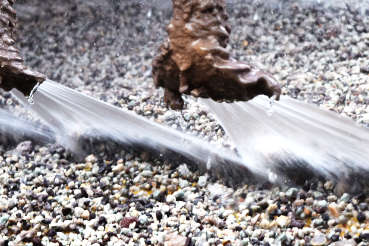
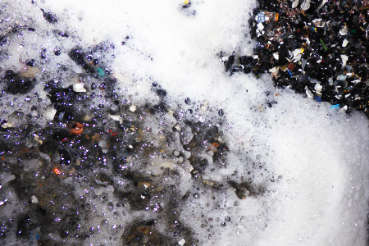
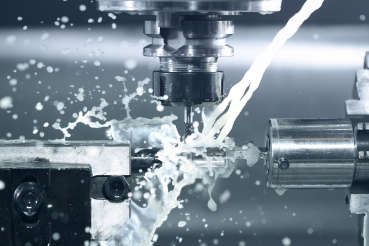





The appropriate process depends on the specific sludge, its moisture content and the operational requirements. For industrial sludge dewatering, Leiblein relies, amongst other things, on the vacuum belt filter, which dewaters sludge gently and continuously.
Sludge dewatering reduces the volume of sludge. This makes further handling easier and can help to minimise transport and disposal costs. The Leiblein vacuum belt filter is designed for economical, energy-efficient and low-maintenance operation.
Whether a sludge buffer or sludge storage tank is required depends on the design of the plant. In many applications, a sludge buffer is necessary, for example when using a chamber filter press. In the case of a vacuum belt filter (e.g. in combination with a lamella separator), the continuous mode of operation means that a sludge storage tank is not required
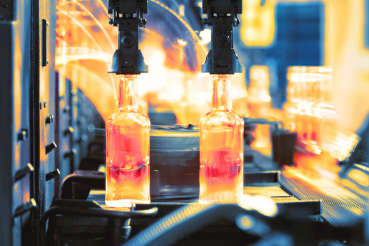
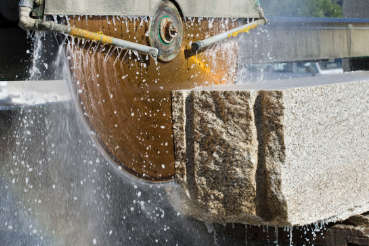
Typically, water-containing sludges are dewatered; these arise from industrial water treatment and physico-chemical Wastewater treatment (precipitation/flocculation) in washing processes, mechanical processing or recycling processes. These include, for example, mineral sludges from the gravel and sand industry, glass processing or the food industry. The key factors in determining the appropriate solution are the composition of the sludge, the required degree of dewatering, and the subsequent disposal or recovery route for the dewatered sludge.